Recipe Review: Mixed-Greens and Sausage Soup with Cornmeal Dumplings by Melissa Clark in Bon Appétit (January 2011)

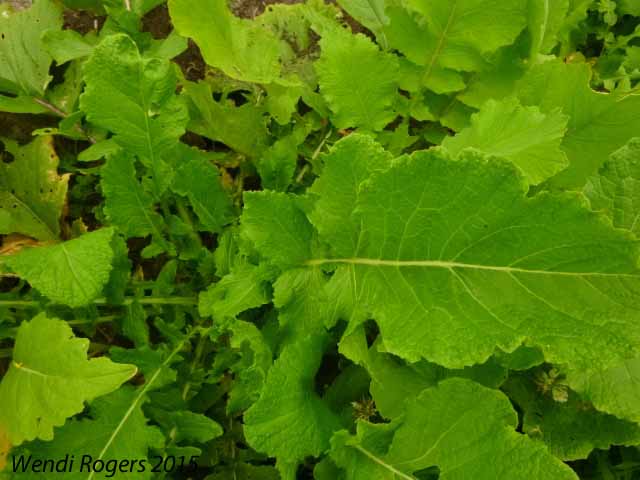
turnip leaves in the garden

turnip leaves in the garden

“The [two Knightley] brothers talked of their own concerns and pursuits, but principally of those of the elder [George], whose temper was by much the most communicative, and who was always the greater talker. As a magistrate, he [George] had generally some point of law to consult John about, or, at least, some curious anecdote to give; and as a farmer, as keeping in hand the home-farm at Donwell, he had to tell what every field was to bear next year, and to give all such local information as could not fail of being interesting to a brother whose home it had equally been the longest part of his life, and whose attachments were strong. The plan of a drain, the change of a fence, the felling of a tree, and the destination of every acre for wheat, turnips, or spring corn, was entered into with as much equality of interest by John, as his cooler manners rendered possible; and if his willing brother ever left him any thing to inquire about, his inquiries even approached a tone of eagerness.” —  from Emma (1815), Chapter 12, Jane Austen

Turnips discussed in Jane Austen’s Emma (1815) were planted as a forage crop for cattle and swine. In the early 19th century when Austen published, the Knightley brothers would have been recognized as progressive, gentlemen farmers who fretted over then modern agricultural practices of field and pasture drainage and crop rotation. Perhaps several turnip roots were harvested as a tenet farmer and his cousin living in gentile poverty left the field for family dinner. Historically, cornmeal, turnips, and their greens were understood to be what you fed livestock, and the foodstuff of people living in poverty. Depending on where and what Western subculture you lived in, you would eat the greens and feed the roots to the hogs, or eat the roots and feed the greens to the livestock. I grew up with stories of my small town Kansas hometown where the only crop that kept people from starving in the early 1930s were the turnips and handfuls of other root vegetables that survived the early 1930s drought by the hand watering of anxious gardeners.

It was not until college it ever occurred to me to eat the greens of a turnip. Turnip greens were bitter but when mixed with other “greens” and cooked to the point they had just wilted, then prepared with a light but spicy sauce the turnip greens and its cousins were tasty. Eating turnip greens also satisfies the “waste not, want not” paradigm I drag behind me like an albatross I have not yet released to the universe.  For some, “greens” are a comfort food, and for others eating “greens” is a political statement. Last week I needed to thin the turnip row in the garden, and hated to see the turnip leaves compost when we could eat the green leafy foliage.

The Mixed-Greens and Sausage Soup with Cornmeal Dumplings was an easy recipe to prepare. I prepared the exactly 18 measuring tablespoon (15 mL) sized dumplings and allowed to sit in the refrigerator for about 2.5 hours. The green onions were the green tops from three onions I pulled from the garden. The onion used in the soup was fresh from the garden. Everything about the soup was straight forward. I did not salt or pepper the soup because I thought the sausage would provide enough salt and pepper to flavor the soup. I used a smoked beef sausage instead of the called for andouille sausage because the grocery store and meat market did not have any that day. I used ½ teaspoon (2.5 mL) hot pepper sauce instead of the called for 1 teaspoon (5 mL) with the idea if I wanted the soup more spicy, I could add a drop or five later at the table. I weighed out 6 oz. (168 g) of washed turnip greens fresh from the garden, which is all I had after thinning the turnip row, and 6 oz. (168 g) kale from the grocery store. The visual different of the seaweed-like turnip greens and curly, tight kale leaves provided a visual and textural interest to the soup. I cooked the dumplings for 25 minutes in the large soup pot containing the soup. It is important to not lift the lid while the dumplings steam cook; let the dumplings steam in peace. The recipe produced 10 cups of hearty soup.

I liked the cornmeal dumplings. The dumpling texture was light and resembled a fluffy pastry, not the doughy gunk I have encountered in previous dumpling recipe attempts. The dumplings almost dissolved when the soup was reheated, which was disappointing. I do not expect the dumplings to survive freezing intact. The dumplings thickened the soup to the point I had to add the leftover 2 cups (500 mL) chicken broth to keep the soup in soup form. Next time, I will store the dumplings separate from the soup. Perhaps storing separately will maintain the integrity of the delightful little bread.

This is a tasty, garden-fresh, summer soup I will make again.

Here is the link to the recipe:

http://www.epicurious.com/recipes/food/views/mixed-greens-and-sausage-soup-with-cornmeal-dumplings-362971

Book Review: Many Lonely Lords, or Douglas: Lord of Heartache and Worth: Lord of Reckoning, both by Grace Burrowes

When the Romance Writers of America (RWA) 2015 RITA finalists, the premier U.S. awards for the romance genre, were announced in late March I thought I would read and then review finalists for several categories. I decided to start the reviews with the self-published finalists. I have nothing but respect, and am in awe, of writers who self-publish and do it so well their work is nominated for an annual industry award. The RITA award is a way to acknowledge excellence in the romance genre by recognizing quality published romance novels and novellas. The award is named to honor RWA’s first president Rita Clay Estrada. Since I discovered the RITA finalist lists several years ago, I reliably find a good read and unknown to me authors.

The first books I downloaded from this year’s finalist list were Grace Burrowes’ finalists. Grace Burrowes has three, count them three, published works nominated for the 2015 awards. The two Historical Romances: Long, Douglas: Lord of Heartache (traditionally published, Sourcebooks, Casablanca, Deb Werksman, editor) and Worth: Lord of Reckoning (self-published) are part of the Lonely Lords Series, which is up to twelve published books. The third nomination is a contemporary novella, Kiss and Tell, which I have not read, yet.

There lies the problem…the Lonely Lord Series. So far most of the romance novels I have read since March have been about Lonely Lords. While each book is able to “stand alone” it helps to know the others for background because all of the characters interact throughout the, so-far, twelve book series. Full novels are happening while other separate novels are happening. For example, in Trenton (Book 10 of the series) events are simultaneously, but independently, happening in Darius (Book 1 and also a 2014 RITA Historical Romance: Long finalist). I now fully appreciate the duress Darius was under while he was emotionally doing the best he could in his story while dealing with all the family drama and tragedy we discover in his brother Trenton’s story. While certain events that happen in one book may be described differently in another, the difference serves the needs of that particular novel, and that is a good thing.

If you expect a linear time sequence moving from one book to the next, you will not find one. Burrowes is proving herself to be a master at plot and organization. Over the 12 book sequencing, it is best to think of how the stories are position in time as seen in Ishiguro’s The Buried Giant (2015) or Doerr’s award-winning All the Light We Cannot See (2014), but I am not sure that was Burrowes intention with the Lonely Lord Series even though that is the best description I can make among the series’ novels.

I read Douglas: Lord of Heartache first because it is Book 8 of the Series, and it was the first book in the award category listing. In synopsis, an unwed woman born a lady but with an out-of-wedlock child is the steward of one of her rich, titled cousin’s estates, and is asked to advise a Viscount Amery if a particular estate he might purchase would be profitable farm investment. To say more would be to give away the story’s intrigue. The twists and turns of this book were not expected; this is not your usual historical romance novel. Burrowes chases the female protagonist, Gwen, up a tree and throws all sorts of rocks and smelly, rotten vegetables at her. Douglas, the male lead, is also put through trials and tribulations before earning Gwen’s hand in marriage. The Windham family play a prominent role to the story, if you are familiar with in Burrowes’ Windham Series. The overall story starts out as a “seduction” narrativebut Burrowes turns that plotline/device on its head. Douglas: Lord of Heartache is a “happily ever after” story where that ending description is undisputable.

Worth: Lord of Reckoning is Book 11 of the Series. This is the better book of Burrowes’ two 2015 RITA historical long fiction finalists.  In synopsis, Worth Kettering, solicitor/man-of-business for normally ignored/underserved individuals in late Regency-era London and “rake at large” visits his country estate for the first time in five years, where he meets his housekeeper, Jacaranda, and their lives become entangled, everyone has their secrets, and everyone must decide what is more important, money, family or love. Burrowes puts all her characters, primary and secondary, through hoops of fire and Jacaranda and Worth are no different. It is a true “happily-ever-after” story. Worth’s financial wellbeing is not settled until the very end, and I did not know if his finances would be successfully resolved. I think what I like about Burrowes writing, and why I am willing to read all twelve books is that she leaves you questioning if some aspect of the character’s life is going to work out for the best for the male and female heroes. Worth is better written than Douglas. Worth has better dialogue, a smoother flow, and a better first third. The Douglas story is more unconventional and daring, but not as daring as Darius (Book 1) which I think is a better book. Worth is my favorite of all twelve books.

The RITA awards will be announced July 25, 2015. Worth is an e-book, though a print copy is available through Amazon. Douglas looks to be available as a print copy or e-book pretty much everywhere. I am including links to Burrowes’ website and the RITA awards information.

Douglas: Lord of Heartache

http://graceburrowes.com/books/douglas.php

Worth: Lord of Reckoning

http://graceburrowes.com/books/worth.php

For more information on 2015 RITA finalists, past winners, and the Romance Writers of America

https://www.rwa.org/2015finalists

Recipe Review: Oat Scones with Apple-Pear Butter in The Best Quick Breads (2000) by Beth Hensperger

oat scones fresh from the oven

oat scones fresh from the oven

Oats: “A grain, which in England is generally given to horses, but in Scotland supports the people.” — Dr. Samuel Johnson’s (1709-1784) ‘Dictionary of the English Language’ (1755)

Rolled oats as oatmeal drizzled with real maple syrup is my breakfast food of choice when it is not 90°F (32.2°C) at 7 AM. Steel-cut oats is my first choice for cooked oatmeal, when I have access to it. Doctor Johnson is correct as he defines oats in the first important dictionary of Modern English. Until the Oxford English Dictionary (starting in 1884) came along, Johnson’s Dictionary literally defined use and spelling of the English language. I have fed oats to horses, cattle, goats, sheep, and songbirds. Some people I have met over the years refuse to eat oatmeal or any oat product because they see it as livestock feed. I have met Germans who feel the same way about corn (maize). Oats and maize are the foods of folks living in poverty. Oats is a high fiber food and good for your physical heart, and I would argue, too, your soul on cold winter mornings.

The Oat Scone recipe is one I have wanted to try but was daunted by the instructions for incorporating the oat flour. Whole wheat flour is not something I keep on hand, either. My parents have a Vita-mix® and grind their own whole wheat flour for bread. While my father processed the wheat berries one evening, I thought “Hey, he could grind whole oats into flour, too.” So, he did. We processed rolled oats with the whole wheat flour, as called for in the recipe. I used freshly ground whole wheat and oat flour for the scones.

This scone recipe went together quickly. This recipe is probably the simplest of the scone recipes in this cookbook. I mixed the ingredients in order and made no changes to the ingredients. I did not cut in the butter into the flour until it resembled coarse crumbs but stopped when the butter was still what I would call chunky and thinking “Oh, that’s to big.” While watching a Julia Child episode with a bread baker from California, the baker guest convinced me you don’t want to cut the butter into small pieces or what I usually stop at garden pea size. Keep the butter pieces larger for lighter bread, if I remember correctly.

The wetness of the dough surprised me. Adding additional flour would have made a heavier dough and scone. The need to pat into a round and use a cookie cutter as directed was easy to understand once you handled the dough. Cutting into triangles would not work. The scones would not bake well as a triangle, you need a round structure and not one with corners (chemistry and physics at work). The dough was wetter than, and not as adhesive as I would have liked. The seemingly not adhesive quality to the rounds concerned me, but the scones baked well.

The scones baked to a pretty, golden color. They were light in texture, and not at all heavy and hard like I feared when I placed the wet, firm, cement-consistency rounds on the baking tray. When I put them in the over I predicted the outcome to be golden hockey pucks. They were sweeter than I expected with only three tablespoons light brown sugar.

The recipe includes an apple-pear butter which I also made. The apple-pear butter was very good. Apples and pears dehydrated or dried for this recipe were sweet with no added sugar and tasted good on toast and in peanut butter sandwiches. I could taste the pear which I was not expecting because pear to me has a very faint flavor except if you pick the past-ripe pears off the ground as the wind is blowing the pears off the tree. Beware of the falling pears if you should do that.

The scones I did not eat within a couple of days I froze and forgot about them. Mom pulled the sealed plastic bag out one morning when looking for a frozen orange juice can and asked: “What’s this?”

To thaw and heat from frozen I place a scone wrapped in aluminum foil in a cold oven and set the temperature to 400°F (204.4°C). Heat the scone for twenty minutes. Twenty minutes is long enough the scone to be hot and moist in the center but not dried out or over-brown.

I would describe this as an excellent autumn or winter recipe for breakfast, brunch, or with a hearty soup. The dehydrating or drying of fresh apples and pears for immediate use in the apple-pear butter intensified the flavors and sugars and compliments the sweet nuttiness of the whole grains. The scones freeze well, but freezer burn might set in if left in the freezer for more than 6 months.

The cookbook is available through your local library, an independent books store, or online through the publisher. You can also publish through your favorite online retailer. The cookbook ‘The Best Quick Breads: 150 Recipes for muffins, scones, shortcakes, gingerbreads, cornbreads, coffeecakes, and more’ by Beth Hensperger is full of recipes for every season and appetite.

http://www.harvardcommonpress.com/the-best-quick-breads/

The Oat Scone and Apple-Pear Butter recipe reviewed is from an edition published by The Harvard Commons Press in 2000. The edition the publisher sells on their website has a May 2012 date.

I am also including a link to Johnson’s Dictionary with his definition of oats which is great. In the Johnson’s Dictionary, he defines, with the 1755 spelling, oats as:

“A grain, which in England is generally given to horfes, but in Scotland fupports the people.”

https://archive.org/stream/dictionaryofengl02johnuoft#page/n205/mode/2up

Recipe Review of Dried Apricot-Pecan Bread, in The Best Quick Breads (2000) by Beth Henspergen

Apricots are important icons to several cultures around the world. The stone fruit is as important as olives to other cultures. Like olives in some places in the Middle and Near East, intentionally destroying an apricot tree is such an extreme insult over which people that are willing to kill. The apricot we know today may have been developed in Armenia up to 8,000 years ago. Apricots have been identified as cultivated in India 5,000 years ago. Spanish Missionaries carried apricot seedlings west across North America as they carried the Gospel and sought golden salvation in the Mediterranean-climate of California. The pale orange fruit dries into a golden bronze coin when not treated with preservatives. Apricots were an important commodity in along the Persian and Silk Road trade routes. Today, Turkey is the largest producer of dried apricots.

Two loaves of Dried Apricot-Pecan Bread from The Best Quick Breads (2000) by Beth Hensperger

Two loaves of Dried Apricot-Pecan Bread from The Best Quick Breads (2000) by Beth Hensperger

The recipe for Dried Apricot-Pecan Bread is one of my favorite quick bread recipes. I shared it at work several times a year. My English and Irish co-workers called it a wonderful tea bread. I considered this the best critique available. It is best served cool and sliced thin with a very sharp knife. Sweetened butter is best.

I need to first say I love this cookbook, but that does not mean the recipes do not need to be tweaked to bake the best bread.  I have been using the cookbook for over ten years and each recipe has its own adjustments.

I recommend the Turkey apricots over the California apricots. I use kitchen scissors to cut the dried fruit into not quite match stick size, but maybe two match sticks wide pieces. When you hydrate the 12 oz chopped, dried apricots, you can use 8 oz water, or orange juice, or orange liqueur.

There is nothing special to the mixing of the dry ingredients. Use the best flour you can afford. It really does make a difference in the finished bread. The 1/2 cup whole-wheat flour which the recipe called for and I used in the photographed loaves here was ground by my father from wheat berries he purchased from King Arthur Flour at their office in Atchison, Kansas in a Vitamix food processor. My family takes flour quality very seriously.

The recipe calls for 1 cup of sugar which is included in the first step when you marinate the apricots. I used a half cup of finely granulated sugar and in this batch I think that was to much. The surface of the bread was much to brown, in my opinion. That said, I had a nice center crack on one loaf, which indicated good expansion during baking. The recipe calls to allow the dough to rest 15 minutes before placing in the pre-heated oven. I allowed the dough to rest 20 minutes before baking.

It has been suggested if I want to avoid the quick bread from cracking on its top surface I need to allow the dough to rest before baking. I think this is important especially when dealing with quick bread recipes that rely on baking soda for expansion, such as this recipe. The 4 oz plus a little orange juice added at the end provides the acidity to trigger the baking soda and any expansion that occurs before and during baking.

When combining liquids, mix the two eggs with the 4 oz orange juice, then add to the rest of the ingredients. I do not recommend substituting orange liqueur. You need the orange juice acidity to interact with the baking soda.

My main complaint about the recipes in the cook book is that they consistently do not call for enough liquid to adequately combine the dry ingredients with the wet ingredients. I have had the best results in hand mixing this recipe. It is very important to not over-mix but the dry ingredients do need to be evenly moistened. Add more liquid, here orange juice, a tablespoon at a time until the flour does not stick to the mixing bowl. The recipe calls for 60 minutes baking time, but this recipe is done, provides a clean toothpick when inserted into the top of each loaf, right at 50 minutes.

Dried Apricot-Pecan Bread is wonderful at a brunch, on a picnic served with paper-thin slices of honey ham and a small amount of marmalade, or as a mid-afternoon snack with cream cheese. This quick bread can be as sophisticated or as simple as you desire.

The recipe book I use is The Best Quick Breads: 150 Recipes for Muffins, Scones, Shortcakes, Gingerbreads, Cornbreads, Coffeecakes, and More published in 2000 by The Harvard Common Press. ISBN: 1-55832-171-3  It appears the book was republished in 2012.

http://www.harvardcommonpress.com/the-best-quick-breads/

Poetry Review: what is amazing by Heather Christle

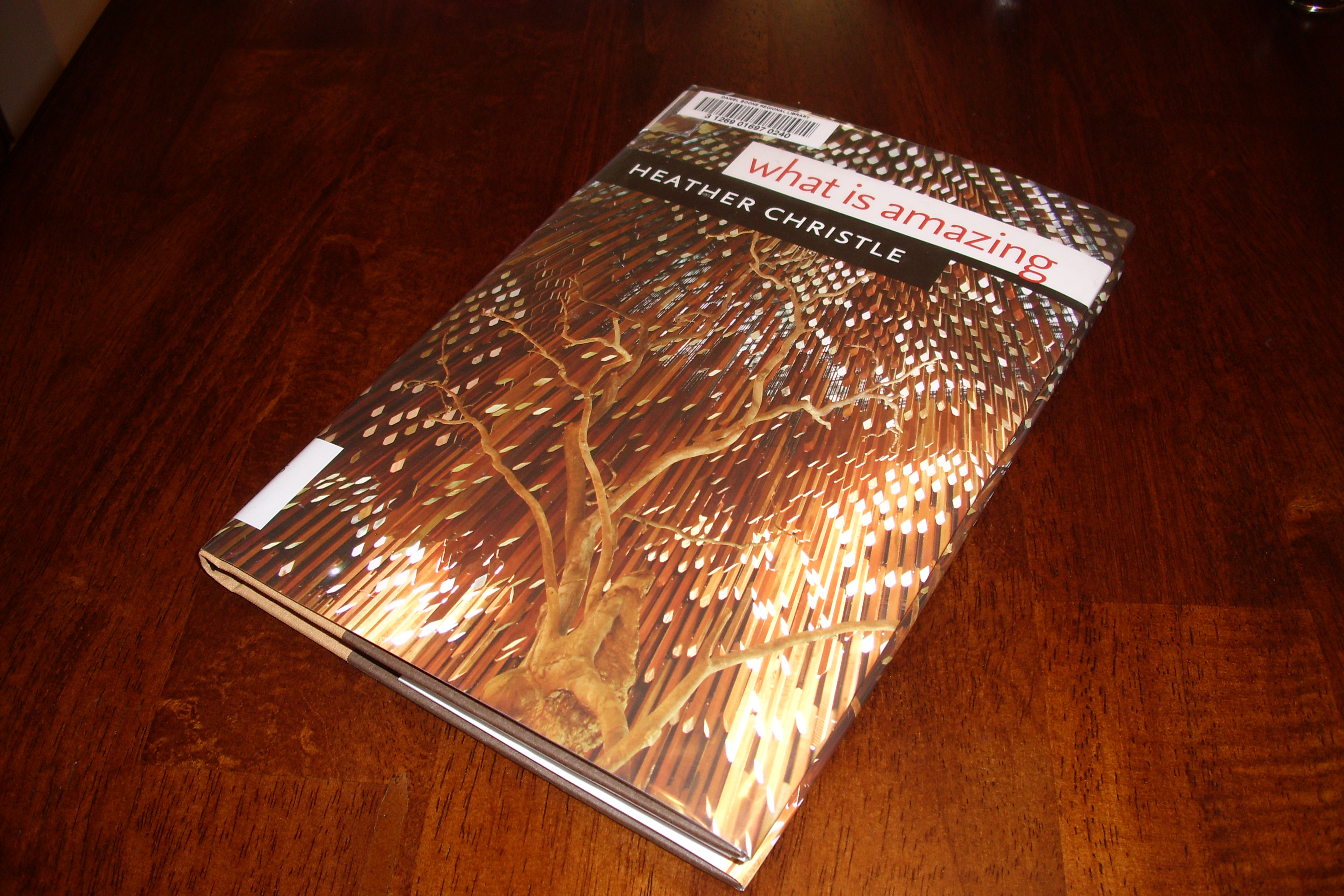
The cover of what is amazing by Heather Christle

The cover of what is amazing by Heather Christle

I first read what is amazing by Heather Christle at 2:30 in the morning when I could not sleep. I thought I would start by reading the first two or three poems then read something less interesting until I felt sleepy. I read the book all the way through in one sitting. My initial response was a combination of “you cannot be serious” and “oh, that’s good”.

what is amazing is a challenge if you are looking to enjoy and read traditional poetry. I enjoy well-done experimental, modern poetry as well as a well-crafted sonnet. I heard the echoes of Walt Whitman (compare “Oh, Captain, My Captain” to its antithesis Christle’s “The Seaside!”), Emily Dickinson  and William Carlos Williams. I am not sure that is a good thing to hear such loud echoes of other poets in published poems. It is not the same thing to drag the ghosts of great poets into your work as to point at a particular poem and say, “It is like that.”  The challenge is to craft your truth as reflected in a William Carlos Williams poem. Christle expresses her truth, a very 21st-century truth, in the poetry presented in what is amazing.

The collection is divided into three sections. The rationale is not obvious. You have to sit and think about the poems as a group which is probably the best way to approach what is amazing.

The poems in this collection are tasked to generate feelings, empathy within the reader. The reader is vital to Christle’s poems. The poems are not a voice speaking, telling you what to think, but an invocation of an emotional response within the reader.

The collection starts out with “The Seaside!” letting the reader know this is not a book of traditional poetry. My favorite poems are found in the middle section of the book. The middle section poems have clearer, tighter imagery. “Spider” is my favorite poem in the collection. The imagery of “Difficulties” and several other poems throughout, such as “If You Go into the Woods You Will Find it has a Technology”, reminded me of Flatland: A Romance of Many Dimensions (1884) by E.A. Abbott. “Basic” is an amusing poem invoking the computer programming language BASIC. Modern subjects and images are used as the voice and objects interact and attempt to generate an emotion in the reader. These are not easy poems. I think the reliance on imagery and the reader’s response to the imagery makes most of the poems ineffective when read aloud.

After sitting with what is amazing for several weeks I still have the alternating responses of “that does not work” and “very good”. Some things work in this collection, and some attempts are not successful. I will read along and stumble over a couplet that is like Emily Dickinson and that bothers me. I would recommend what is amazing as a solid introduction to what will be 21st-century poetry. What is a unique 21st century emotion or sensibility? I have not figured that out, yet, and Christle is working on it, too.

By Heather Christle, what is amazing (2012), Wesleyan University Press. ISBN: 9780-8195-7217-6.

http://www.wesleyan.edu/wespress

Recipe Review of “Perfect Baked Eggs” by Celeste Rogers, in Cook’s Illustrated, November/December 2012

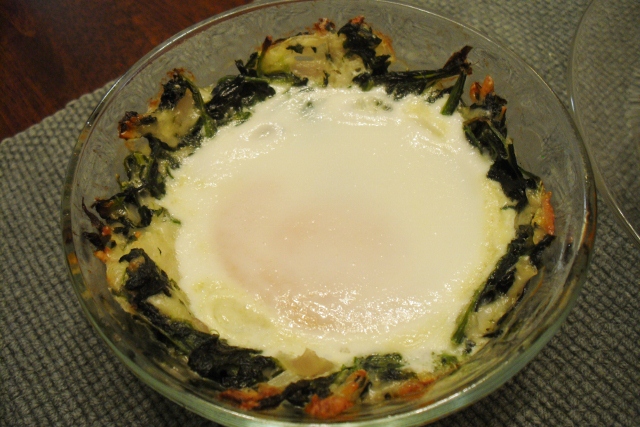
Figure 1 A baked egg in a cream-spinach bed in a 10-ounce ramekin.

The recipe and article “Perfect Baked Eggs” by Celeste Rogers (no relation to me that I know of) in Cook’s Illustrated, November/December 2012 is an attempt to demonstrate how to bake an individual egg with a spinach filling (Fig 1). For the most part this is about as good of instructions on how to bake an egg without overcooking it that I have seen. The ingredients are basic ingredients already in the kitchen and freezer.

I have looked for a recipe to successfully make little, single egg dishes for years. I have tried several recipes including Scott Peacock’s “Eggs with Cream, Spinach, and Country Ham” in Gourmet, January 2008. Peacock’s “Eggs” recipe should work but never has. I have since traipsed along tinkering with the egg dish every fall and winter looking for something I can use as a contribution to a holiday breakfast. Rogers’ “Perfect Baked Eggs” worked well so that I would not have to tinker with it if all I wanted was a simple egg dish. I will have to jazz it up to make it Christmas Morning material.

What I will criticize is the size of casserole recommended for the dish. Rogers recommends “6-ounce ramekins with a 3 ¼-inch diameters, measured from the inner lip.” I think this is to small. I only have 4 6-ounce ramekins and had to use 2 10-ounce ramekins in order to fill out the six servings the recipe made. The difference surprised me (Fig 2). The 10-ounce containers did not overcook the eggs after the 6 minutes in a 425 degree oven followed by the ramekin siting 10 minutes on a wire rack. The eggs in the 6-ounce dish are firm after cooling and will be fine to eat, but with the 10-ounce casseroles the soft egg will nicely mix with the spinach filling.

Figure 2 Side-by-side comparison between the baked egg cooked in a 10-ounce ramekin and a 6-ounce ramekin.

I recommend the use of Parmesan cheese. It is a dry cheese that will not make the dish greasy or watery like cheddar or any other generic cheeses in the dairy section of the average grocery store. If you can spend the money to purchase the good Italian Parmesan cheese, do that. You will not be disappointed.

The oven time Rogers recommends, 6 to 8 minutes at 425 F if using a metal pan to hold the ramekins and 500 F if using a glass backing dish, is to long. The 6-ounce ramekins were overcooked. Temperatures are correct, I think. Since the demise of Gourmet I have had to look to Cook’s Illustrated for good recipes. I have noticed Cook’s Illustrated recipes tend to recommend times that will overcook the dish. I have wondered if this is an effort to make sure the food is fully cooked, even when the writer and recipe recommend checking the internal temperature. This is a recipe where, in order to prevent overcooking you will be standing or kneeling in front of the open oven door watching the eggs cook until the egg whites are just full white.

I will make the “Perfect Baked Egg” recipe again. I will also tinker with it. What I have found with these egg casseroles is 5-ounce spinach and 5-ounce finely chopped “woodsy”-tasting mushroom is good. What I like is adding, per ramekin, a half slice home-smoked bacon, frozen firm then sliced into 1/8-inch slivers with kitchen shears, then fried with grease discarded (bacon grease does not add anything good to the taste of the egg casserole no matter how fresh the smoked bacon is so stick with Rogers’ 2 tablespoons butter to cook the shallot in at the beginning) and two large, cooked shrimp, frozen firm then sliced into less-than ¼-inch pieces added to the spinach/mushroom/shallot/half-and-half/Parmesan mixture.

Recipe and demonstration video can be found at the Cook’s Illustrated website if you are a online member by searching for “baked egg” .

I served the baked egg with French Onion Soup (Gourmet magazine recipe), milk, and for dessert Chocolate Pudding Cake.

Tai Chi Chuan, No. 1

I have wanted to write about the internal martial art Tai Chi Chuan for a long while. I have not had the nerve. What do I know about anything? I have practiced Tai Chi for over ten years with Dr. Pablo Mendoza and Mr. Kenny Green, both currently in Columbia, Missouri. I have attended workshops. Nothing more than 10 years of daily practice, really. Intensity of practice has varied over the years. There have been months when I practiced two hours a day, and periods of time when I practiced twenty minutes a day while my hot cereal cooked in the early morning. I am currently attempting to find the right balance of Tai Chi practice and sitting meditation.

For those who are interested, and find importance in, instructor linage then I can tell you Pablo studied at the Taoist Sanctuary in San Diego, California in the mid- to late 1990s. Pablo put it on a certificate. The certificate is in a box somewhere. I have been told the Taoist Sanctuary has not taught the Yang style since the late 1990s, and has moved to the Chen style.

I practice what I call Yang style of Tai Chi. I started studying Tai Chi with the Chen Man-Ching form—which is not a Yang Family form—and have been concentrating on the Yang Family standard long form. I have no idea if they would approve or not. Someday, when I have the money and the opportunity arises, I would like to study with an official Yang Family instructor.

Pablo has a Taoist background. Kenny is just Kenny. As a result, and what attracted me into a long-term relationship with Tai Chi is their relaxed Taoist-spiced attitude towards life and Tai Chi practice. I am not a Taoist. I am Presbyterian.

So, there I am in a park, minding my own business moving through the Yang Family standard long form when someone I have known for years comes up and says:

“Your Tai Chi is all wrong. You are not doing it the right way.”

So, respectfully I ask: “What do you suggest I do differently?” I get a lecture about placement of my little toe and the outer joint of my pinky finger in relation to the inside of my knee. My eyes glaze over and at some point he says something about my earlobes.

My first, inner-punk response is to say, “You are taking this way too seriously. Here, lick this metaphoric, hallucinogenic toad.” However, my inner-Hedon would respectfully suggest if your ego throws a fit about how anyone practices Tai Chi in a park, or randomly posts to a blog, you should go and read, then meditate on the first song/poem of the Tao Te Ching attributed to Loa Tzu and written in the 6th century B.C.

Recipe Review: Beef and Mushroom Pot Pie

Beef and Mushroom Pot Pies

I like this recipe. I am always on the look-out for new pot pie recipes. Some work, some do not work, and this one worked just fine. Historically, I have disliked “Taste of Home” main meal recipes because they, in my opinion, tend to involve opening a couple of cans of this and that, stirring, and heating at 375° F for twenty minutes for something rather fattening, salty, and unappetizing. Perhaps this is unfair. I do prefer to use fresh ingredients from local farmers so that my money supports the families I run into at the public library or a community event instead of the money disappearing into an anonymous, international food processor.

This pot pie recipe is very filling. It would be ideal on a winter, or dreary spring or autumn evening. I could envision reheating a ramekin after shoveling the driveway.

The pot pie recipe was easy to put together. Preparation time was exactly 40 minutes like the recipe says. The needed ingredients were accessible if not already in the kitchen. I did purchase the prepared beef gravy, sour cream, fresh mushrooms, a baking potato and tube of refrigerated crescent rolls.

The recipe starts off by calling for boiling the cut-up potato in a microwave. I boiled the potato on the stove-top because I do not have a microwave. I used 1-lb ground beef instead of the called-for 1-lb beef top sirloin steak cut into 1/4 inch pieces. It has been my experience steak cuts cooked in small pieces turn out tough unless you marinate them overnight, and even then they are chewy. After cooking the ground beef, I sauteed the vegetables. I used a large, white onion instead of the red onion. White onions are not as bitter, I think, as most red onions you find in a store. I did not use ketchup. I do not keep ketchup on hand. Ketchup is high in sugar, and if it is necessary I will substitute organic tomato sauce.

While the vegetables cooked, I prepared the refrigerated crescent rolls. I was very tempted to purchase two tubes of refrigerated crescent rolls. I did not see how one tube could adequately supply the 16 slices without squishing the slices. As seen in the picture, the thin slices expanded and worked okay. In my opinion one can never prepare enough refrigerated crescent rolls, so the next time I will go ahead and spend the money and use two tubes with 8 slices from each. Or, you could cut sixteen slices from each tube and have a flower pattern. The exposed meat and gravy is almost unappetizing looking so the larger or more slices of crescent roll dough cooked golden brown will add to the eye appeal of the finished dish.

Using the ramekins or individual casserole dishes is an excellent idea. They are easy to transport and re-heat. I only have two 16-oz round dishes, so I used the 2-cup square dishes, too. The round ramekins are available at Pier One Imports or you can go on-line to QVC and purchase there. Department stores sometimes also carry ramekins.

When baking, make sure to have a tray under the dishes. They will be full enough they will boil over.

I have been thinking of ways to add one more cup of frozen vegetables to the recipe. One ramekin, in theory, has cup potatoes, ¼ a large onion, ½ cup sliced mushrooms, ¼ cup carrots, and ¼ cup peas. In my mind this equates to about one serving of vegetables. Each ramekin also contains ¼ cup sour cream, 1/4 ground black pepper, 1/4 tablespoon cornstarch and ¼ cup store-bought, low sodium beef gravy. The ramekins are boiling over already so I do not there is enough space to add another 8-oz vegetables to each ramekin to reach the recommended 2 cups per meal.

In order to obtain the suggested two servings vegetables per meal, you should prepare a salad, or as “Taste of Home” suggests, serve with assorted fresh vegetables such as carrots, celery, cucumbers, broccoli, and radishes.

Recipe Beef and Mushroom Pot Pie by Macey Allen (Green Forest, Arkansas), published in “Taste of Home” February/March 2012 issue.

Poetry Review: Silver Roses: Poems by Rachel Wetzsteon

Silver Roses: Poems (2010) by Rachel Wetzsteon, Persea Books, Inc.

I completely enjoyed this collection. It was like having an intelligent conversation with a complete stranger and there was nothing awkward about it.

Even though the collection’s three sections are united in theme, I will refer to several poems in chronological order. The opening poem “Among the Neutrals” sets Wetzsteon’s exploratory flag solidly in the ground to say: Decide, refuse ambivalence and a world of “maybe”. This is an interesting way to start this collection, in the scheme of things. I would like to why this selection was made.

The second poem, “Freely from Wyatt” is my second favorite poem. There was an immediate emotional response. Stanza i. While I do not understand the purpose of biscotti in the culinary world, I understand Wetzsteon’s sentiment. Homemade apple dumplings work just as well. Stanza ii. Yes, exactly! Stanza iii. Yes, exactly! You are welcome here.

“An Actress Prepares” touches upon something I wonder about when reading contemporary poetry. I flow with the poem until she gets half way through and the voice of the actress states: “Vote me off the island.” Will anyone in twenty years understand what “Vote me off the island” means? It is like watching an early 19th century English Regency costume drama/film and, in one domestic scene, there is a US Civil War quilt pattern on a bed. The vast majority of people would not notice such a pathetic detail, but I do. It’s like hitting a deep pot hole in the road. It threw me out of the suspension of reality. That said, I understand no one drives a horse drawn wagon through the woods on snowy nights these days (apologies to Robert Frost) as I as a reader “get” the emotional and physical sensation of the frigid isolation and impatient pull of the voice’s horse. This is not a criticism against Wetzsteon, just a question for the universe in general.

Many of the poems in the first two sections are what I would call writing exercise poems. Writers, after all, write and are passionate to the point of obsessive about their craft if they are to be any good. I found it odd to find them in a collection but they are quite well done. They are enjoyable and I would guess that Wetzsteon had fun doing them. Maybe that’s where the brightness of the first two sections originates.

The final section “The Tennis Courts At Stuyvesant Town” has a definite darkness to it. Wetzsteon is emotionally working through things, or at least attempting to, and not getting to the other side.

The final poem of the collection, “Silver Roses”, I was surprised to recognize as having read before. For whatever reason I thought it had been in “The New Yorker” but it wasn’t until after reading the bibliography at the end, I realized I had read the poem “Silver Roses” in an issue of October, 2010 “Poetry” which I had purchased. This poem at first read first stuck with me like fuzzy weed seeds stick to your socks. You cannot wash them off and must pick them off the sock cuffs. I knew what the voice was saying. It was the shared emotional feeling I have with my dad over a film or concert, the feeling of leaving a concert (here opera) and taking the desire for that reality into the street and walking to the car and driving home with a nocturne feeling of a magical night. It is that joyful, floating feeling you have in spite of yourself.

I did not read Wetzsteon’s biography and Grace Schulman’s Introduction until I had read the collection through twice. It came as a shock this was a posthumous collection.

I cannot imagine I am the first to make this sort of an analogy: It was like you are at a dinner party and the dishes are in the dish washer or sink and everyone is sitting back and drinking wine and talking, laughing and you have discovered a wine someone picked-up on their international travels which you really like (and you don’t really like wine) and the host (God, bless him) is staring at the empty wine bottle and you are tipsy and a little impertinent and you sit there with your empty glass and demand: “What do you mean there is no more of this wine?”

Silver Roses: Poems by Rachel Wetzsteon (1967-2009)

ISBN: 978-0-89255-364-8

http://www.perseabooks.com

Recipe Review: Zucchini Ragout with Bacon and Tomato from The Art of Simple Food (2007) by Alice Waters

for Norma….

Miss Bingley was engrossed by Mr. Darcy, her sister scarcely less so; and as for Mr. Hurst, by whom Elizabeth sat, he was an indolent man, who lived only to eat, drink, and play at cards; who, when he found her to prefer a plain dish to a ragout, had nothing to say to her.” – Jane Austen, Pride and Prejudice


The ragout of Jane Austen wrote about, and we are told enjoyed, was a relatively exotic, spicy dish that I can say was probably nothing like Alice Water’s Zucchini Ragout with Bacon and Tomato found in The Art of Simple Food (2007). Jane Austen’s contemporary, Regency Era readers would have understood the character comparison: Elizabeth Bennet preferred good, common sense, “John Bull” English food whereas Mr. Hurst preferred the exotic, imported food styles of the European Continent. “John Bull” was the patriotic English yeoman used in Napoleonic War propaganda to contrast the solid English people to the floozy Neopoleonic French. Elizabeth’s lack of sophistication that generations of readers, and Mr. Darcy, admire is what has kept Pride and Prejudice in constant print for over two hundred years.

Zucchini Ragout with Bacon and Tomato is not a spicy ragout. I had problems as I made this recipe from what I perceived as the limited use of spices. I eventually learned this recipe is not about decorating and compensating vegetables but celebrating fresh, summer vegetables.

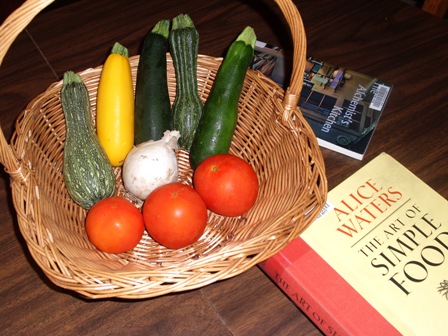
Fig 1. Vegetables purchased at the farmer's market

I purchased several ingredients at the Saturday Farmer’s Market. Zucchini: $5.50. Tomatoes: $2.00. Onion: $0.50 (Fig 1). I did not have bread to toast, as suggested by the recipe, so I prepared brown rice. I roasted several cloves of fresh garlic and added the soft garlic the cooked brown rice.

The bacon from the recipe was home cured and smoked by my father. He used a maple cure. Once you have had fresh, home-made bacon, you cannot eat the stuff sold in the grocery stores. Home-made bacon stands, its broad shoulders straight and shouts as it touches your tongue, “Bacon!” Whereas store-bought bacon slouches into your mouth with its hands in its pockets and mutters “Yeah, I’m bacon.”

Fig 2. Zucchini was just added to tomato/onion mixture

The recipe is very straight forward (Fig 2). I would freeze the bacon firm to make cutting the bacon easier. I would slice and dice all vegetables before starting. The timing is accurate for the preparation steps. Once things start happening, there is no time to prepare ingredients without overcooking the other vegetables.

Fig 3. Zucchini Ragout with Bacon and Tomato served with brown rice

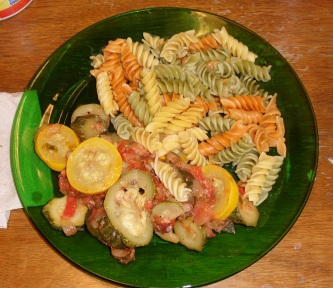
Fig 4. Next day, for lunch. Zucchini ragout warmed in a microwave and served with pasta.

Warmed up the next day for lunch at work, it tasted fine (Fig 4). The vegetables were a bit watery. I served it with pasta that is supposed to contain a serving of vegetables. I think this dish may be best consumed on the day of cooking.

As I have play with recipes from this Alice Water’s cookbook, I appreciate what she is doing. The quality and tastiness of the ingredients are on display. You could not successfully make this recipe “as-is” in January with anemic, hydroponic tomatoes and imported, cardboard zucchini. This zucchini ragout demands quality ingredients which I am lucky to have access to through my mid-Missouri, local farmer’s market. Go to the library and check the cookbook out.

Publisher: Clarkson Potter/Publishers

ISBN: 978-0-307-33679-8