Tag Archives: Review

Recipe Review: Morning Glory Muffins by Pam McKinstry

“Merry Christmas, little daughters! I’m glad you began at once, and hope you will keep on. But I want to say one word before we sit down. Not far away from here lies a poor woman with a little new-born baby. Six children are huddled into one bed to keep from freezing, for they have no fire. There is nothing to eat over there; and the oldest boy came to tell me they were suffering hunger and cold. My girls, will you give them your breakfast as a Christmas present?”

They were all unusually hungry, having waited nearly an hour, and for a minute no one spoke; only a minute, for Jo exclaimed impetuously,—

“I’m so glad you came before we began!”

“May I go and help carry the things to the poor little children?” asked Beth, eagerly.

I shall take the cream and the muffins,” added Amy, heroically giving up the articles she most liked.”

From “Little Women” (1868, 1869), Chapter II A Merry Christmas by Louisa May Alcott (1832-1888)

“[European] Muffins. good, but indigestible…” from “Mark Twain’s Notebooks and Journals, Volume II: (1877-1883)”

For several years I was making muffins all the time. It was not the muffin fad that came and, for the most part went in the last ten years, but Beth Hensperger’s “The Best Quick Breads” (2000) cookbook I think I acquired through an art-and-craft book club. I enjoy quick breads, but storing and freezing muffins is an easier way of eating quick bread when you live on your own alone.

I found no mention of the word “muffin” or “crumpet” or any alternate spellings in Samuel Johnson’s 1785 Dictionary of the English Language. An English muffin, also called Yorkshire muffin, or rock bread is a yeast bread cooked on a griddle in the kitchen, or a flat rock over hot embers. Documentation of English muffins goes back the 13th century. According to etymonline.com the word “muffin” first made an appearance in 1703. “Crumpet” can be found in written use in the 1690s. Jane Austin would have known what a muffin or crumpet was, but it may not have been socially acceptable for her, or her characters, to consume such a working class food. I have not studied Austin’s letters or other writing to know either way. Muffin men were 17th century through early 20th century English street food vendors who cooked the bread on griddles fresh for their customers. So, the food trucks that specialize in modern muffins and oven-fresh cookies are continuing a culinary tradition possibly dating back to the time of England’s Elizabeth I.

Recipes for what Americans, coffee house, and muffin enthusiasts would recognize as a “muffin” possibly first appeared in the USA’s very first cookbook “American Cookery” (1796) by Amelia Simmons. Simmons’ “American Cookery” was the first to include as an ingredient a very refined potash or pearlash, a native-to-North America alkali leavening agent. Through the generation of carbon dioxide while baking, including pearlash caused the bread to rise as seen with modern baking powder. This was the birth of the modern quick bread. Identifiable muffin recipes appeared in US cookbooks in the early 19th century along with the entry of muffin pans into the marketplace and kitchen.

The recent muffin fad was not the first muffin fad. When I was little in the 1980s there was a muffin recipe that was all the rage. When we visited my aunt in the Kansas City area (Kansas side) she made Morning Glory Muffins which she loved. The recipe came from Nantucket Island which in the Midwestern imagination was the playground of the rich and famous. When I was ten years old I did not appreciate what a Morning Glory Muffin was or what it represented to the larger American culture.

From what I have been able to find, Morning Glory Muffins were first put together by Chef Pam McKinstry  in 1978 for her Morning Glory Café on Nantucket Island, a 3-by-15 mile long island about 30 miles off of the coast of Massachusetts. The original Morning Glory Muffin recipe appeared in Gourmet magazine in the reader submitted recipe section in 1981. Appearing in the reader submitted recipe section of Gourmet was like winning an Olympic gold medal. The muffin recipe ‘went viral’ by 1981 standards. In 1991 the recipe was selected by readers as one of Gourmet’s twenty-five favorite recipes published in the previous fifty years (1940-1990 or 1941-1991).

The Morning Glory Muffin is a catch-all recipe that uses lots of odds and ends that can be found in a busy bakery and café. The crushed pineapple, two cups grated carrots, grated apple, raisins, shredded coconut, and pecans are all in amounts that look like to me Chef McKinstry had enough to make something, but not enough of any one ingredient, except maybe carrots, to make anything in particular. The results are wonderful, rich, sweet, and freezes well muffins.

Morning Glory Muffins

Morning Glory Muffins

This is a very easy muffin recipe. You spend more time grating and chopping the ingredients than you do mixing. Use canola oil as directed or another flavorless cooking oil. A more forward flavor cooking oil will negatively interact with the oils in the nuts and other botanical compounds in all the fruit and vegetable ingredients.

I would strongly recommend hand mixing in a large glass mixing bowl. The batter is thick and heavy. A hand-held electric mixer would be overwhelmed by the heaviness of the batter. A hand-held electric mixer works great to mix and aerate the liquid ingredients, mixing the eggs and oil until almost double in volume. With a stand mixer it would be very easy to overmix the combined dry ingredients and wet ingredients. Overmixing is a danger when making quick breads. Overmixed quick bread is heavy because the gluten in the flour activated while mixing and the bread does not raise while baking. Add the wet ingredients to the dry ingredients and hand stir until the mixture is just combined, and the flour only just moist. Gently spoon the batter into paper-lined or well-greased muffin pan cups. Place in hot 350°F (176.7°C) oven and leave the door closed for thirty minutes. No Peaking (Mother!Jamie!Dad!Sam!). The muffins are done when the tester comes out clean after being inserted into the baked muffin.
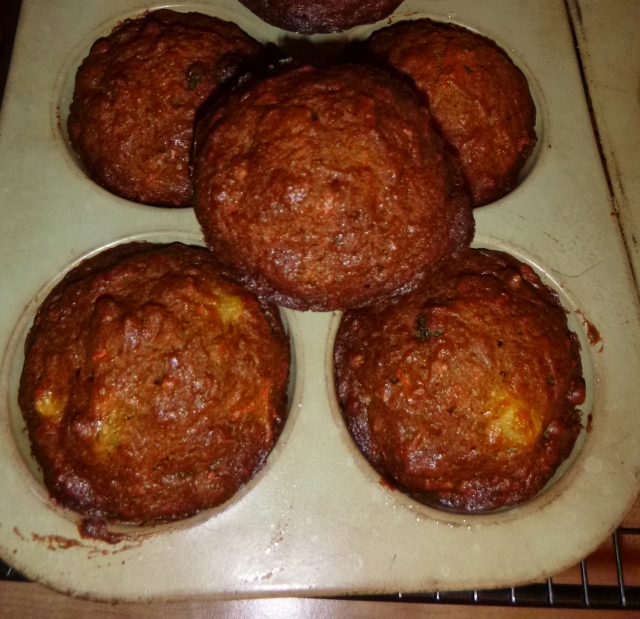
Morning Glory Muffins made from the original recipe by Chef Pam McKinstry.

Morning Glory Muffins made from the original recipe by Chef Pam McKinstry.

The muffins would be good for a Sunday or holiday brunch. They really do need to sit for at least overnight to reach their best flavor and texture. Make the evening before the brunch or breakfast and allow to sit overnight in a storage container. Butter spreads well with the muffins as well as plain cream cheese. These muffins freeze extremely well for up to two months. A muffin reheated after frozen for longer than two months is not as tasty.

The Morning Glory Muffin recipe has been around almost forty years. It has become a dependable recipe for me. For a little bit of work you can get a great result.

Below is a link to Pam McKinstry’s original Morning Glory Muffin recipe, via Earthbound Farms’ website. I have, yet, to find a copy of the original 1981 Gourmet magazine. I will keep looking.

http://www.ebfarm.com/recipes-morning-glory-muffins/b/1/?utm_expid=1477063-0.1mQljNIXQAKNU7dPjX547g.6&utm_referrer=https%3A%2F%2Fwww.google.com%2F

Below is more information about “American Cookery” (1796) by Amelia Simmons. I have read repeatedly that “American Cookery” was the first American cookbook written by an American for Americans. The Spanish settlers arrived in the Western North America as early as the 1530s so I am not comfortable making that claim until I have proof the Spanish settlers and Catholic missionaries were not writing cookbooks for their American mission settlements on how to use local ingredients, too.

http://digital.lib.msu.edu/projects/cookbooks/html/authors/author_simmons.html

If you like “Little Women” by Louisa May Alcott or have not read it before, you can download a free e-book. Please, feel free to leave a donation for the Gutanburg.org efforts. There are other free copies of “Little Women” available online. Or, you can support your favorite local bookstore and purchase a hard copy. Or, you can visit your public library and practice your social skills with the librarian behind the circulation desk.

http://www.gutenberg.org/ebooks/514

Mark Twain’s Notebooks and Journals are available through Google Books.

www.etymonline.com provides a quick glance at the evolution of words we use every day
Poetry Review: what is amazing by Heather Christle

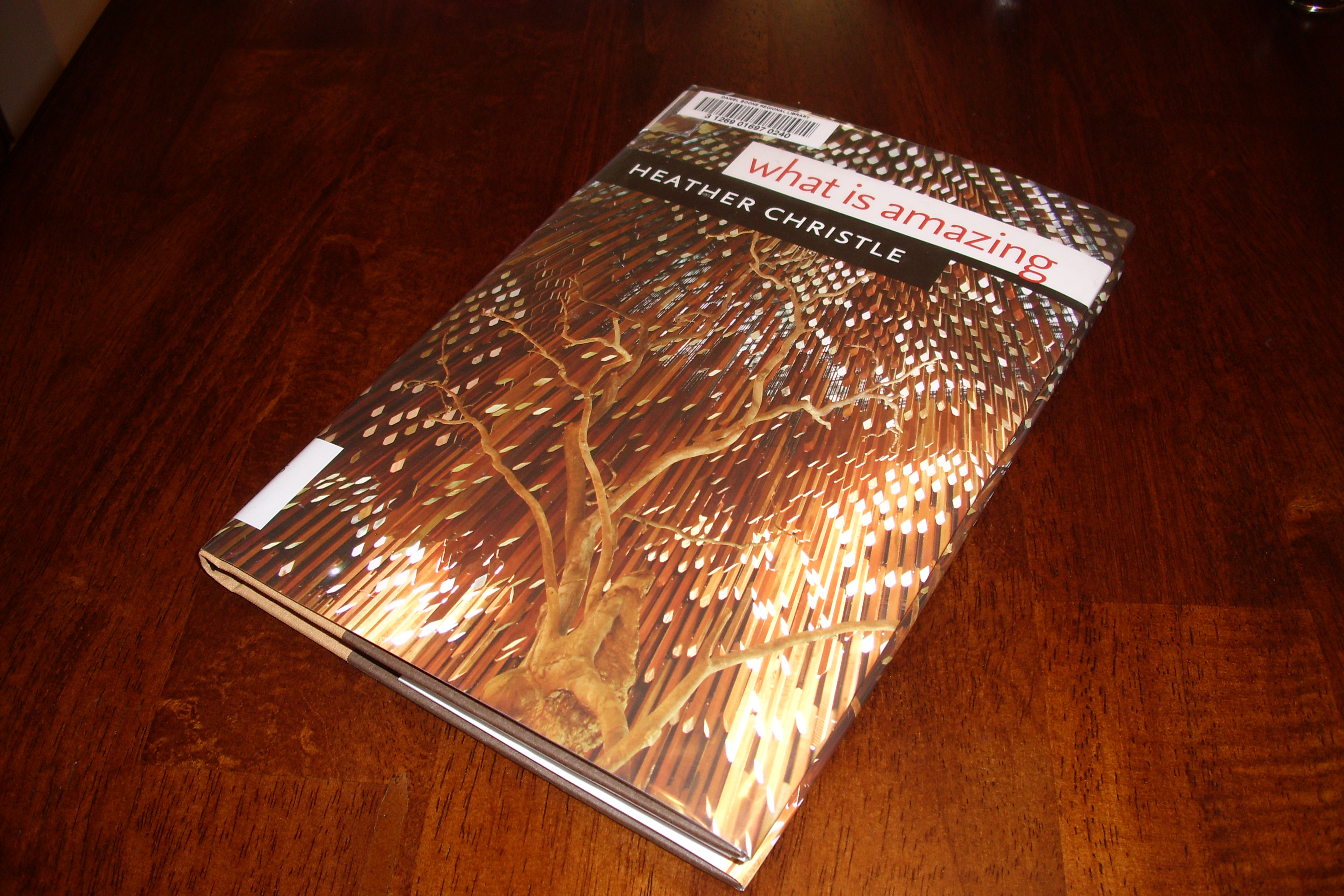
The cover of what is amazing by Heather Christle

The cover of what is amazing by Heather Christle

I first read what is amazing by Heather Christle at 2:30 in the morning when I could not sleep. I thought I would start by reading the first two or three poems then read something less interesting until I felt sleepy. I read the book all the way through in one sitting. My initial response was a combination of “you cannot be serious” and “oh, that’s good”.

what is amazing is a challenge if you are looking to enjoy and read traditional poetry. I enjoy well-done experimental, modern poetry as well as a well-crafted sonnet. I heard the echoes of Walt Whitman (compare “Oh, Captain, My Captain” to its antithesis Christle’s “The Seaside!”), Emily Dickinson  and William Carlos Williams. I am not sure that is a good thing to hear such loud echoes of other poets in published poems. It is not the same thing to drag the ghosts of great poets into your work as to point at a particular poem and say, “It is like that.”  The challenge is to craft your truth as reflected in a William Carlos Williams poem. Christle expresses her truth, a very 21st-century truth, in the poetry presented in what is amazing.

The collection is divided into three sections. The rationale is not obvious. You have to sit and think about the poems as a group which is probably the best way to approach what is amazing.

The poems in this collection are tasked to generate feelings, empathy within the reader. The reader is vital to Christle’s poems. The poems are not a voice speaking, telling you what to think, but an invocation of an emotional response within the reader.

The collection starts out with “The Seaside!” letting the reader know this is not a book of traditional poetry. My favorite poems are found in the middle section of the book. The middle section poems have clearer, tighter imagery. “Spider” is my favorite poem in the collection. The imagery of “Difficulties” and several other poems throughout, such as “If You Go into the Woods You Will Find it has a Technology”, reminded me of Flatland: A Romance of Many Dimensions (1884) by E.A. Abbott. “Basic” is an amusing poem invoking the computer programming language BASIC. Modern subjects and images are used as the voice and objects interact and attempt to generate an emotion in the reader. These are not easy poems. I think the reliance on imagery and the reader’s response to the imagery makes most of the poems ineffective when read aloud.

After sitting with what is amazing for several weeks I still have the alternating responses of “that does not work” and “very good”. Some things work in this collection, and some attempts are not successful. I will read along and stumble over a couplet that is like Emily Dickinson and that bothers me. I would recommend what is amazing as a solid introduction to what will be 21st-century poetry. What is a unique 21st century emotion or sensibility? I have not figured that out, yet, and Christle is working on it, too.

By Heather Christle, what is amazing (2012), Wesleyan University Press. ISBN: 9780-8195-7217-6.

http://www.wesleyan.edu/wespress

Recipe Review of “Perfect Baked Eggs” by Celeste Rogers, in Cook’s Illustrated, November/December 2012

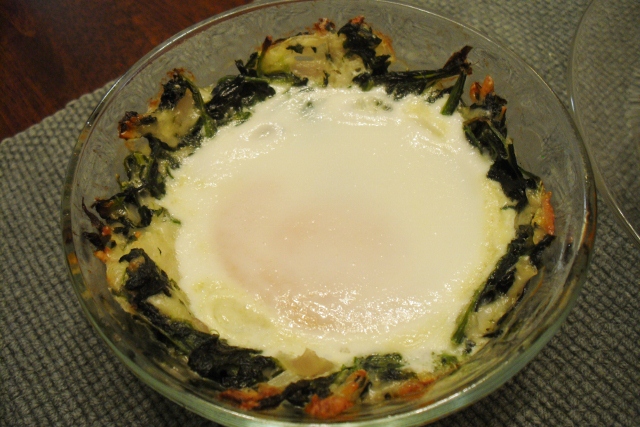
Figure 1 A baked egg in a cream-spinach bed in a 10-ounce ramekin.

The recipe and article “Perfect Baked Eggs” by Celeste Rogers (no relation to me that I know of) in Cook’s Illustrated, November/December 2012 is an attempt to demonstrate how to bake an individual egg with a spinach filling (Fig 1). For the most part this is about as good of instructions on how to bake an egg without overcooking it that I have seen. The ingredients are basic ingredients already in the kitchen and freezer.

I have looked for a recipe to successfully make little, single egg dishes for years. I have tried several recipes including Scott Peacock’s “Eggs with Cream, Spinach, and Country Ham” in Gourmet, January 2008. Peacock’s “Eggs” recipe should work but never has. I have since traipsed along tinkering with the egg dish every fall and winter looking for something I can use as a contribution to a holiday breakfast. Rogers’ “Perfect Baked Eggs” worked well so that I would not have to tinker with it if all I wanted was a simple egg dish. I will have to jazz it up to make it Christmas Morning material.

What I will criticize is the size of casserole recommended for the dish. Rogers recommends “6-ounce ramekins with a 3 ¼-inch diameters, measured from the inner lip.” I think this is to small. I only have 4 6-ounce ramekins and had to use 2 10-ounce ramekins in order to fill out the six servings the recipe made. The difference surprised me (Fig 2). The 10-ounce containers did not overcook the eggs after the 6 minutes in a 425 degree oven followed by the ramekin siting 10 minutes on a wire rack. The eggs in the 6-ounce dish are firm after cooling and will be fine to eat, but with the 10-ounce casseroles the soft egg will nicely mix with the spinach filling.

Figure 2 Side-by-side comparison between the baked egg cooked in a 10-ounce ramekin and a 6-ounce ramekin.

I recommend the use of Parmesan cheese. It is a dry cheese that will not make the dish greasy or watery like cheddar or any other generic cheeses in the dairy section of the average grocery store. If you can spend the money to purchase the good Italian Parmesan cheese, do that. You will not be disappointed.

The oven time Rogers recommends, 6 to 8 minutes at 425 F if using a metal pan to hold the ramekins and 500 F if using a glass backing dish, is to long. The 6-ounce ramekins were overcooked. Temperatures are correct, I think. Since the demise of Gourmet I have had to look to Cook’s Illustrated for good recipes. I have noticed Cook’s Illustrated recipes tend to recommend times that will overcook the dish. I have wondered if this is an effort to make sure the food is fully cooked, even when the writer and recipe recommend checking the internal temperature. This is a recipe where, in order to prevent overcooking you will be standing or kneeling in front of the open oven door watching the eggs cook until the egg whites are just full white.

I will make the “Perfect Baked Egg” recipe again. I will also tinker with it. What I have found with these egg casseroles is 5-ounce spinach and 5-ounce finely chopped “woodsy”-tasting mushroom is good. What I like is adding, per ramekin, a half slice home-smoked bacon, frozen firm then sliced into 1/8-inch slivers with kitchen shears, then fried with grease discarded (bacon grease does not add anything good to the taste of the egg casserole no matter how fresh the smoked bacon is so stick with Rogers’ 2 tablespoons butter to cook the shallot in at the beginning) and two large, cooked shrimp, frozen firm then sliced into less-than ¼-inch pieces added to the spinach/mushroom/shallot/half-and-half/Parmesan mixture.

Recipe and demonstration video can be found at the Cook’s Illustrated website if you are a online member by searching for “baked egg” .

I served the baked egg with French Onion Soup (Gourmet magazine recipe), milk, and for dessert Chocolate Pudding Cake.

Poetry Review: Silver Roses: Poems by Rachel Wetzsteon

Silver Roses: Poems (2010) by Rachel Wetzsteon, Persea Books, Inc.

I completely enjoyed this collection. It was like having an intelligent conversation with a complete stranger and there was nothing awkward about it.

Even though the collection’s three sections are united in theme, I will refer to several poems in chronological order. The opening poem “Among the Neutrals” sets Wetzsteon’s exploratory flag solidly in the ground to say: Decide, refuse ambivalence and a world of “maybe”. This is an interesting way to start this collection, in the scheme of things. I would like to why this selection was made.

The second poem, “Freely from Wyatt” is my second favorite poem. There was an immediate emotional response. Stanza i. While I do not understand the purpose of biscotti in the culinary world, I understand Wetzsteon’s sentiment. Homemade apple dumplings work just as well. Stanza ii. Yes, exactly! Stanza iii. Yes, exactly! You are welcome here.

“An Actress Prepares” touches upon something I wonder about when reading contemporary poetry. I flow with the poem until she gets half way through and the voice of the actress states: “Vote me off the island.” Will anyone in twenty years understand what “Vote me off the island” means? It is like watching an early 19th century English Regency costume drama/film and, in one domestic scene, there is a US Civil War quilt pattern on a bed. The vast majority of people would not notice such a pathetic detail, but I do. It’s like hitting a deep pot hole in the road. It threw me out of the suspension of reality. That said, I understand no one drives a horse drawn wagon through the woods on snowy nights these days (apologies to Robert Frost) as I as a reader “get” the emotional and physical sensation of the frigid isolation and impatient pull of the voice’s horse. This is not a criticism against Wetzsteon, just a question for the universe in general.

Many of the poems in the first two sections are what I would call writing exercise poems. Writers, after all, write and are passionate to the point of obsessive about their craft if they are to be any good. I found it odd to find them in a collection but they are quite well done. They are enjoyable and I would guess that Wetzsteon had fun doing them. Maybe that’s where the brightness of the first two sections originates.

The final section “The Tennis Courts At Stuyvesant Town” has a definite darkness to it. Wetzsteon is emotionally working through things, or at least attempting to, and not getting to the other side.

The final poem of the collection, “Silver Roses”, I was surprised to recognize as having read before. For whatever reason I thought it had been in “The New Yorker” but it wasn’t until after reading the bibliography at the end, I realized I had read the poem “Silver Roses” in an issue of October, 2010 “Poetry” which I had purchased. This poem at first read first stuck with me like fuzzy weed seeds stick to your socks. You cannot wash them off and must pick them off the sock cuffs. I knew what the voice was saying. It was the shared emotional feeling I have with my dad over a film or concert, the feeling of leaving a concert (here opera) and taking the desire for that reality into the street and walking to the car and driving home with a nocturne feeling of a magical night. It is that joyful, floating feeling you have in spite of yourself.

I did not read Wetzsteon’s biography and Grace Schulman’s Introduction until I had read the collection through twice. It came as a shock this was a posthumous collection.

I cannot imagine I am the first to make this sort of an analogy: It was like you are at a dinner party and the dishes are in the dish washer or sink and everyone is sitting back and drinking wine and talking, laughing and you have discovered a wine someone picked-up on their international travels which you really like (and you don’t really like wine) and the host (God, bless him) is staring at the empty wine bottle and you are tipsy and a little impertinent and you sit there with your empty glass and demand: “What do you mean there is no more of this wine?”

Silver Roses: Poems by Rachel Wetzsteon (1967-2009)

ISBN: 978-0-89255-364-8

http://www.perseabooks.com

Recipe Review: Zucchini Ragout with Bacon and Tomato from The Art of Simple Food (2007) by Alice Waters

for Norma….

Miss Bingley was engrossed by Mr. Darcy, her sister scarcely less so; and as for Mr. Hurst, by whom Elizabeth sat, he was an indolent man, who lived only to eat, drink, and play at cards; who, when he found her to prefer a plain dish to a ragout, had nothing to say to her.” – Jane Austen, Pride and Prejudice


The ragout of Jane Austen wrote about, and we are told enjoyed, was a relatively exotic, spicy dish that I can say was probably nothing like Alice Water’s Zucchini Ragout with Bacon and Tomato found in The Art of Simple Food (2007). Jane Austen’s contemporary, Regency Era readers would have understood the character comparison: Elizabeth Bennet preferred good, common sense, “John Bull” English food whereas Mr. Hurst preferred the exotic, imported food styles of the European Continent. “John Bull” was the patriotic English yeoman used in Napoleonic War propaganda to contrast the solid English people to the floozy Neopoleonic French. Elizabeth’s lack of sophistication that generations of readers, and Mr. Darcy, admire is what has kept Pride and Prejudice in constant print for over two hundred years.

Zucchini Ragout with Bacon and Tomato is not a spicy ragout. I had problems as I made this recipe from what I perceived as the limited use of spices. I eventually learned this recipe is not about decorating and compensating vegetables but celebrating fresh, summer vegetables.

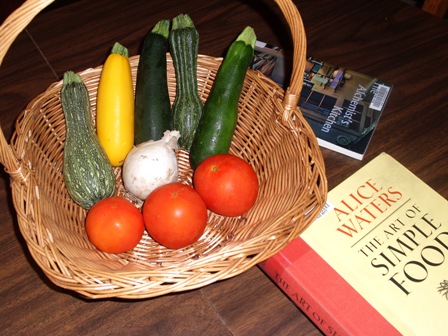
Fig 1. Vegetables purchased at the farmer's market

I purchased several ingredients at the Saturday Farmer’s Market. Zucchini: $5.50. Tomatoes: $2.00. Onion: $0.50 (Fig 1). I did not have bread to toast, as suggested by the recipe, so I prepared brown rice. I roasted several cloves of fresh garlic and added the soft garlic the cooked brown rice.

The bacon from the recipe was home cured and smoked by my father. He used a maple cure. Once you have had fresh, home-made bacon, you cannot eat the stuff sold in the grocery stores. Home-made bacon stands, its broad shoulders straight and shouts as it touches your tongue, “Bacon!” Whereas store-bought bacon slouches into your mouth with its hands in its pockets and mutters “Yeah, I’m bacon.”

Fig 2. Zucchini was just added to tomato/onion mixture

The recipe is very straight forward (Fig 2). I would freeze the bacon firm to make cutting the bacon easier. I would slice and dice all vegetables before starting. The timing is accurate for the preparation steps. Once things start happening, there is no time to prepare ingredients without overcooking the other vegetables.

Fig 3. Zucchini Ragout with Bacon and Tomato served with brown rice

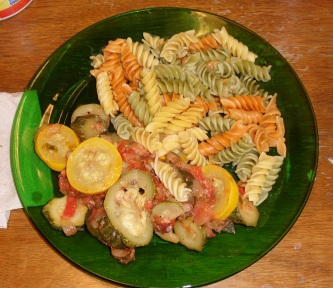
Fig 4. Next day, for lunch. Zucchini ragout warmed in a microwave and served with pasta.

Warmed up the next day for lunch at work, it tasted fine (Fig 4). The vegetables were a bit watery. I served it with pasta that is supposed to contain a serving of vegetables. I think this dish may be best consumed on the day of cooking.

As I have play with recipes from this Alice Water’s cookbook, I appreciate what she is doing. The quality and tastiness of the ingredients are on display. You could not successfully make this recipe “as-is” in January with anemic, hydroponic tomatoes and imported, cardboard zucchini. This zucchini ragout demands quality ingredients which I am lucky to have access to through my mid-Missouri, local farmer’s market. Go to the library and check the cookbook out.

Publisher: Clarkson Potter/Publishers

ISBN: 978-0-307-33679-8

Poetry Collection Review: The Alchemist’s Kitchen (2010) by Susan Rich

The Alchemist’s Kitchen (2010) by Susan Rich published by White Pine Press

I really wanted to like the first poetry collection I reviewed. I wanted to admire the collection as a whole with individual poems synthesizing into a well-rounded exploration of some grand idea. I did not desire to find myself disappointed.

When I plucked The Alchemist’s Kitchen from the 811 section of the “New Book” shelves of the public library, I had every expectation of liking the book. I went home, sat down and read straight through over 4 or 5 days. I admired the title and the concepts stated in the three sections of the book and looked forward to seeing how the poet explored and expanded the concept of an alchemist’s kitchen.

Alchemy is the art and science of taking basic, gross, undesirable material (example: lead) and processing it into a more valued, possibly “purer” substance (example: gold). Alchemy as a concept is used in industrial processing and in writing fiction: take society’s trash and transform it into “gold”.  The Alchemist’s Kitchen has the structure to accomplish showing the process of transforming emotional trash into jewels but does not produce.

Disappointed, I sat the book down beside my reading chair. For several days I scowled at it. I moved it from the kitchen table to the ottoman several times. Then, I picked up the collection and read several random poems.

Over the next couple of weeks, I read one or two poems before leaving for work in the morning, while supper cooked, or before going to bed a night. I slowly fell in love with the poems as individuals. I feel like I went to class with the girl who wanted to disappear and stepped in front of a truck. I can see Mrs. Myra Albert Wiggins mounting photographs in his shop. I know his smile as he watches his wife ride her bicycle down the street or when the playboys make snide remarks about his clothes. I feel sorrow for the refugee girl whose hand was cut off by a African bandit who thought her plastic, shiny, gold-colored bracelet had monetary value.

Here lies the problem with The Alchemist’s Kitchen. What Rich has is several poetry collections scattered throughout one book. There is more than one, independent, incomplete story told in this collection. If Rich was attempting to show that the multiple stories (for example, the plight of refugees all over the globe, the legacy of Mrs. and Mr. Myra Albert Wiggins) come to the same alchemical end, she does not accomplish that. I want to know more about Mrs. And Mr. Myra Albert Wiggins. I want to watch the story of the refugees from beginning to end. Some of these poems are beautiful, but as a whole the collection is not cohesive. If she could explore one story, the potential impact of that collection could be earth-shaking.

Publisher: White Pine Press (www.whitepine.org)

ISBN: 978-1-935210-14-6

Recipe Review: Peaches ‘N’ Cream Éclairs with Bourbon Caramel Sauce by Lawrence Karol in Gourmet, July 2007

Several years ago, for the family 4th of July picnic, I made several desserts. The cousins are still talking about the Pavlova. During the U.S. Memorial Day holiday at the end of May, the cousins start asking what dessert am I going to make for the 4th of July this year. Since the Pavlova, my dessert contribution is now expected to be dramatic and tasty.

For 4th of July, 2011, I prepared Lawrence Karol’s Peaches ‘N’ Cream Éclairs with Bourbon Caramel Sauce from Gourmet, July 2007. Because this is my mother’s party, she has always volunteered to buy ingredients. The nice thing about this recipe, and the author states this in his brief write-up, is that most ingredients can be found in a well-stocked pantry and refrigerator. The only ingredients my parents purchased for this recipe were the white peaches ($3.80) and heavy cream ($3.59). One nice thing about cooking at my parents’ house is they have every kitchen gadget you could want to play with.

Following the directions of the recipe, the choux pastry quickly came together with no fuss. After mixing the flour mixture of margarine, water, salt and flour in the sauce pan, I transferred the dough to a metal mixing bowl. It took longer than the recommended five minutes to cool the dough to the point I felt comfortable adding the eggs. I wonder if this isn’t because I was using a metal bowl and not a glass bowl. When I make éclairs at my house, I use glass mixing bowls. Perhaps the metal holds the heat longer than glass.

The recipe only made seven pastries instead of the recipe-listed eight. Before this recipe, I have not used a pastry bag to make éclairs. Usually, I evenly divide the dough into desired number of pieces, use a large spoon to place on the baking sheet and shape (Unorthodox?). The pastry bag was a two person operation: I held the pastry bag and my mother spooned the dough out of the mixing bowl.

Figure 1. Pastries were sliced after cooling.

Baking was easy. Placing the pastries in a preheated oven at 425° F for 15 minutes and then lowering the temperature to 400° F for 15 minutes (30 minutes total baking) produced lightly golden pastries (Fig. 1). Using my father’s silicon-lined baking sheet produced pastries that were the same color on the bottom as well as the top. When using a buttered baking sheet or a sheet lined with parchment paper, I often have trouble obtaining a uniform color on the top and bottom of the pastry.

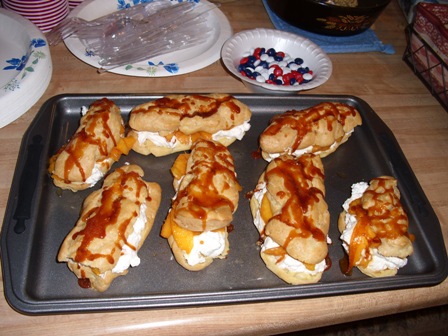
Figure 2. Eclairs with peaches, whipped cream and caramel.

One disappointment is the pastries were not as puffy as other éclair recipes I like to make (Fig. 1). The pastry tasted rich, but crumbled when sliced. That said, the photograph of the finished dessert on page 20 of Gourmet, July 2007 looks rather not puffy. So, maybe the pastries were like they were supposed to be. The whipped cream seemed to glue the pastries together (Fig. 2).

Figure 3. Bourbon caramel sauce.

I found it difficult to keep the sauce at a constant temperature; the sauce was either to hot or to cool (Fig. 3). However, making the sauce was easy. I would suggest constant stirring. Once the sugar has melted, you need to take care when adding the water and other ingredients. The steam coming off the skillet could be dangerous. I lightly scalded the tip of my right index finger. The hot material splattered until the sauce calmed down.

Figure 4. My cousin holding the served eclair topped with the bourbon caramel sauce.

The finished éclair with the bourbon caramel sauce was amazing (Fig. 4). I was not prepared for the “Oh my God! This is good.” experience. The cousins, aunts and uncles loved it. My mother declared the recipe “a keeper”. Because this was a family pot-luck there was lots of food so only making seven pastries was not a problem like I feared. There were no left overs, yet everyone who wanted was able to have half an éclair.

I felt like I spent more time fretting over the bourbon caramel sauce than any other task involved with this recipe. There was much more sauce than pastries. The bourbon caramel sauce went wonderfully over my brother’s home-made vanilla ice cream.

If you have not made éclairs before, this would be a good introduction. Éclairs are extremely simple and quick to make. For such little effort, you can look good.

Now, the question is what am I going to do 4th of July, 2012?